

In today’s fast-evolving healthcare landscape, the financial health of a medical practice depends on far more than clinical excellence. Behind every clean claim and on-time reimbursement is a well-coordinated front office management system working seamlessly with billing operations. When front desk management aligns with billing workflows, practices experience delayed payments, claim denials, patient dissatisfaction, and revenue loss. When they work in harmony, everything runs with precision.
This article explores why front office management is the backbone of effective medical billing services, how it directly influences revenue cycle performance, and what modern practices must prioritize to stay competitive and compliant.
What Is Front Office Management in a Medical Practice?
Front office management refers to the administrative leadership and operational oversight of a medical practice’s patient-facing functions. This includes scheduling, registration, insurance verification, patient communication, charge capture initiation, and co-pay collection. In essence, the front desk is where the billing cycle begins, long before a claim ever reaches a payer.
A skilled front office team does not simply greet patients. They collect accurate demographic data, verify insurance eligibility in real time, obtain prior authorizations, and ensure that every encounter is documented with the precision that downstream medical billing depends on.
Core Responsibilities of Front Desk Management
| Function | Impact on Medical Billing |
|---|---|
| Patient registration and data entry | Prevents claim rejections due to incorrect information |
| Insurance eligibility verification | Reduces denials from coverage gaps |
| Prior authorization tracking | Avoids non-covered service write-offs |
| Co-pay and deductible collection | Improves point-of-service cash flow |
| Appointment scheduling accuracy | Reduces no-shows that affect provider productivity |
| Referral management | Ensures payer requirements are met before services |
Each of these functions has a direct, measurable effect on billing accuracy and revenue capture. A single data entry error at registration, such as a misspelled name or incorrect date of birth, can cascade into a rejected claim, a manual appeal, and weeks of delayed reimbursement.
The Direct Link Between Front Desk Operations and Revenue Cycle Management
Many practices treat their front office and billing department as separate silos. This disconnect is one of the most common reasons practices struggle with high denial rates and slow collections. In reality, medical billing and front desk management are two sides of the same coin.
The revenue cycle does not begin when a claim is submitted. It begins the moment a patient schedules an appointment. From that first touchpoint, the front office is gathering information that the billing team will depend on to generate a clean claim.
Key points where front office decisions directly impact billing:
- Incorrect or incomplete insurance information captured at scheduling leads to eligibility-related denials, which account for a significant percentage of all claim rejections in the United States.
- Missing prior authorizations result in payer refusals for services already rendered, leaving the practice to absorb the cost or navigate lengthy appeals.
- Uncollected co-pays at the time of service are far harder to recover after the patient leaves the facility. Point-of-service collections are consistently higher when the front desk is trained to collect with confidence.
- Inaccurate patient demographics cause Medicare and Medicaid claims to fail coordination of benefits checks, triggering delays that strain cash flow.
When front office staff understand these downstream consequences, they become active participants in the revenue cycle rather than passive administrators.
Why Effective Front Office Management Reduces Claim Denials
Claim denials are one of the most expensive problems in healthcare revenue management. Industry data consistently shows that the majority of denied claims are preventable, and a large proportion of preventable denials originate in the front office, not in clinical documentation or billing coding.
Common front office errors that lead to claim denials:
- Entering an insurance ID number incorrectly
- Failing to verify whether a patient’s plan requires a referral
- Missing the authorization window for scheduled procedures
- Collecting the wrong payer information (primary vs. secondary)
- Using outdated fee schedules for patient estimates
A medical billing service that partners closely with front office operations can dramatically reduce denial rates by implementing real-time eligibility tools, pre-visit checklists, and staff training protocols that address these errors at the source.
Case Example: Reducing Denials Through Front Office Integration
A multi-specialty practice in the Midwest was experiencing a 14% claim denial rate, well above the industry benchmark of 5 to 8 percent. An operational audit revealed that 61% of denials were rooted in eligibility and authorization failures that occurred during the patient intake process.
By integrating the front desk workflow with their medical billing platform, implementing automated eligibility verification at the time of scheduling, and training front desk staff on authorization workflows, the practice reduced its denial rate to 6.3% within six months. More importantly, point-of-service collections increased by 22% as staff became more confident initiating financial conversations with patients.
This kind of transformation is only possible when front office management is viewed as a clinical revenue function, not simply a hospitality or administrative role.
How Modern Medical Billing Services Support Front Office Excellence
Leading medical billing services today do not just handle claims processing. They offer holistic revenue cycle support that extends into the front office, providing tools, training, and reporting that empower administrative teams to function at their highest level.
What a comprehensive medical billing service brings to front desk management:
- Real-time eligibility verification tools that integrate with practice management software
- Pre-authorization tracking dashboards that alert staff to pending or missing authorizations
- Patient estimation tools that allow the front desk to provide accurate cost estimates before services are rendered
- Denial analytics reports broken down by root cause, including front office errors
- Staff training and compliance support to keep teams current with payer policy changes
- HIPAA-compliant patient communication platforms for balance notifications and appointment reminders
When a medical billing service operates as a true partner rather than a transactional vendor, it enables the front office to become a proactive revenue driver rather than a reactive administrative function.
Privacy, Compliance, and Patient Trust in Front Office Operations
Front desk management sits at the intersection of patient care and data governance. Every interaction involves the collection and handling of protected health information (PHI), making HIPAA compliance a non-negotiable priority for any practice serious about its reputation and legal standing.
Front office compliance obligations include:
- Verifying patient identity before sharing any account or clinical information
- Obtaining valid authorizations before releasing records
- Maintaining secure handling of insurance cards and identification documents
- Using encrypted, HIPAA-compliant systems for patient communication
- Training staff to recognize and prevent social engineering attempts
Patients today are more aware of their privacy rights than ever before. A breach of trust at the front desk, whether through careless handling of documents or an unguarded conversation in a waiting room, can damage a practice’s reputation and trigger regulatory scrutiny. The best front office management programs embed compliance into daily workflow rather than treating it as an annual training checkbox.
Technology’s Role in Modernizing Front Desk Management
The modern front office is increasingly technology-driven, and practices that invest in the right tools gain a measurable competitive advantage. From automated check-in kiosks to AI-powered eligibility verification, technology is reshaping what front desk teams can accomplish.
Technology Solutions Transforming Front Office Management
| Technology | Primary Benefit |
|---|---|
| Automated eligibility verification | Reduces manual verification time and eligibility-related denials |
| Online patient registration portals | Captures accurate demographic data before the visit |
| Digital intake forms with e-signature | Eliminates paper and reduces transcription errors |
| Patient payment portals | Increases collection rates post-visit |
| AI-driven scheduling tools | Reduces no-shows and optimizes provider productivity |
| Real-time authorization tracking | Prevents authorization-related claim denials |
| HIPAA-compliant text and email reminders | Improves appointment adherence and communication |
Implementing these tools requires thoughtful change management and staff training. A trusted medical billing service can guide practices through technology adoption while ensuring that workflows align with payer requirements and compliance standards.
Building a High-Performance Front Office Team
Technology alone does not create a high-functioning front office. The human element remains central to excellent front desk management. Practices that invest in hiring, training, and retaining skilled administrative professionals see consistently better outcomes across the revenue cycle.
Characteristics of a high-performance front office team:
- Deep understanding of payer policies and insurance terminology
- Confident, empathetic patient communication skills
- Attention to detail in data entry and documentation
- Proactive approach to authorization and eligibility follow-up
- Familiarity with the practice management and EHR systems in use
- Awareness of how their work connects to downstream billing outcomes
Ongoing education is essential. Payer policies change frequently, new coding requirements emerge each year, and patient expectations continue to evolve. Practices that provide continuous learning opportunities to their front office staff create teams that adapt quickly and perform consistently.
Key Performance Indicators Every Front Office Should Track
Measuring front office performance is essential to identifying gaps, celebrating wins, and justifying investment in training or technology. The following KPIs provide a clear picture of how well the front desk is supporting the billing cycle.
Front office metrics that matter:
- Insurance verification rate: Percentage of appointments with verified eligibility before the visit
- Authorization approval rate: Percentage of required authorizations obtained before service
- Point-of-service collection rate: Percentage of co-pays and deductibles collected at the time of the visit
- Registration accuracy rate: Percentage of patient records entered without errors
- No-show rate: Percentage of scheduled appointments that are not kept
- Patient wait time: Average time from check-in to provider encounter
- Front-desk-related denial rate: Percentage of claim denials attributed to intake errors
Tracking these metrics monthly and benchmarking against industry standards allows leadership to make data-driven decisions about staffing, training, and technology investments.
The Strategic Value of Integrating Front Office and Medical Billing Services
The future of healthcare revenue management lies in integration. Practices that break down the wall between front office operations and medical billing unlock significant improvements in cash flow, patient satisfaction, and operational efficiency.
This integration looks different in every practice, but the principles are consistent:
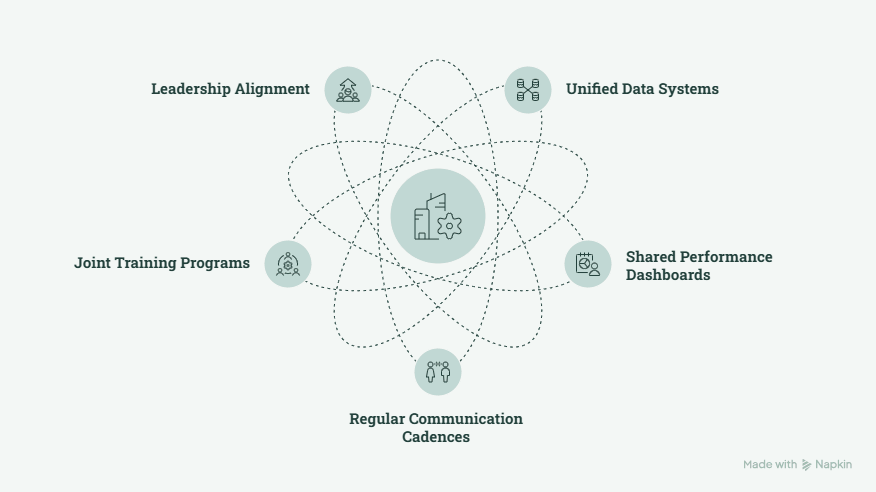
- Unified data systems that allow billing and front office teams to work from the same patient and payer information
- Shared performance dashboards that create accountability across the full revenue cycle
- Regular communication cadences between front office coordinators and billing specialists to address recurring issues
- Joint training programs that give front desk staff visibility into how their work affects claim outcomes
- Leadership alignment that recognizes front office management as a revenue function deserving investment and strategic attention
A high-quality medical billing service brings the analytical expertise and operational frameworks that help practices achieve this integration without requiring a complete overhaul of existing systems.
Conclusion
Effective front office management is not a support function. It is a strategic asset that directly shapes the financial performance of any medical practice. From the moment a patient calls to schedule an appointment to the moment a clean claim is submitted to the payer, the front desk team is making decisions that either protect or erode revenue.
Partnering with a sophisticated medical billing service that understands the critical role of front desk management is one of the highest-return investments a practice can make. When intake accuracy, payer verification, authorization tracking, and patient communication are all functioning at peak performance, the downstream billing process becomes faster, cleaner, and more profitable.
In an era of shrinking reimbursements and rising operational costs, practices cannot afford to treat their front office as an afterthought. The most successful healthcare organizations in the modern era are those that recognize front office excellence and medical billing as a single, unified discipline and build their operations accordingly.