
Introduction
If you’ve ever received a hospital bill or an insurance explanation of benefits, you’ve seen the results of medical coding — even if you didn’t know it. But what is medical coding, exactly, and why does it matter so much in healthcare?
Medical coding is the backbone of the entire healthcare billing system. It’s the process of converting a patient’s diagnosis, treatment, procedures, and medical services into universal alphanumeric codes. These codes are used by hospitals, clinics, insurance companies, and government health programs to process claims, track health data, and ensure providers get paid accurately.
In simple terms, medical coding translates a doctor’s notes into a standardized language that the entire healthcare world understands.
What Is Medical Coding?
Medical coding means assigning specific codes to every medical diagnosis, procedure, service, or supply that a patient receives during a healthcare visit. These codes come from standardized code sets that are recognized globally.
Think of it this way: when a doctor treats a patient for pneumonia and prescribes antibiotics, the medical coder reads the clinical notes and assigns the correct codes for the diagnosis (pneumonia) and the services provided (office visit, lab tests, medications). Those codes then go on the insurance claim.
A simple medical coding definition would be:
Medical coding is the systematic process of translating healthcare diagnoses, procedures, and services into alphanumeric codes for billing, documentation, and data management purposes.
Without accurate medical coding, healthcare providers cannot bill insurance companies, patients cannot receive proper reimbursement, and the entire financial side of medicine would collapse.
What Are Medical Codes?
Medical codes are standardized alphanumeric identifiers assigned to every aspect of a patient’s care. Each code represents something specific — a disease, a procedure, a medication, or a medical supply.
Here’s a quick look at the major code sets used in medical coding:
| Code Set | Full Name | What It Covers |
|---|---|---|
| ICD-10-CM | International Classification of Diseases, 10th Revision, Clinical Modification | Diagnoses and conditions |
| ICD-10-PCS | International Classification of Diseases, 10th Revision, Procedure Coding System | Inpatient procedures |
| CPT | Current Procedural Terminology | Outpatient services and procedures |
| HCPCS | Healthcare Common Procedure Coding System | Supplies, equipment, non-physician services |
| DRG | Diagnosis-Related Groups | Inpatient hospital reimbursement groupings |
Each of these code sets serves a specific purpose, and medical coders must know which system to use based on the healthcare setting.
What Is Medical Billing and Coding? Understanding the Difference
Many people use the terms medical billing and medical coding interchangeably, but they are two distinct roles that work hand in hand.
Medical coding is focused on accurately translating clinical documentation into codes. The coder reads the physician’s notes, identifies the diagnoses and procedures, and assigns the correct codes.
Medical billing takes those codes and uses them to create a claim that is submitted to insurance companies or patients for payment. The biller tracks the claim, handles denials, and ensures the healthcare provider gets reimbursed.
Together, billing and coding medical services form the revenue cycle of any healthcare organization. A coding error can cause a claim to be denied. A billing error can delay payment by weeks. Both roles must be precise and accurate.
Types of Medical Coding
Medical coding is not a one-size-fits-all field. There are several types of medical coding, each serving a different area of healthcare:
1. Inpatient Coding
Used for patients admitted to a hospital. Coders use ICD-10-CM for diagnoses and ICD-10-PCS for procedures. Inpatient coding tends to be more complex because hospital stays involve multiple services and departments.
2. Outpatient Coding
Used for patients seen in clinics, emergency rooms, or same-day surgery centers. CPT and HCPCS codes are primarily used here alongside ICD-10-CM for diagnoses.
3. Professional Fee Coding
Focuses on coding physician services, such as office visits, consultations, and specialist treatments. This uses CPT codes and requires an understanding of Evaluation and Management (E&M) guidelines.
4. Specialty Coding
Some medical coders specialize in a specific area of medicine, such as:
- Cardiology
- Oncology
- Orthopedics
- Radiology
- Pediatrics
- Mental and behavioral health
Specialty coders develop deep expertise in the clinical terminology and coding rules specific to their field.
5. Risk Adjustment Coding
Used mainly in Medicare Advantage and other managed care programs. Risk adjustment coding ensures that health plans receive appropriate payment based on the health status of their patient populations.
How Medical Coding Works: Step by Step
Understanding the coding process helps clarify why it’s such a critical part of healthcare operations.
Step 1: Patient Visit: A patient sees a doctor, nurse practitioner, or other provider. The clinician documents everything — symptoms, diagnosis, tests ordered, procedures performed, and treatment plan.
Step 2: Chart Review: The medical coder reviews the clinical documentation, also called the medical record or chart. They look for specifics: what was the exact diagnosis? What procedures were done? Were there any complications?
Step 3: Code Assignment: Based on the documentation, the coder assigns the appropriate ICD, CPT, and HCPCS codes. Coding guidelines must be followed carefully to ensure accuracy.
Step 4: Claim Submission: The assigned codes are entered into the billing system, and a claim is submitted to the patient’s insurance company (payer).
Step 5: Payment or Denial: The payer reviews the claim, and either approves payment, requests more information, or denies the claim. Accurate coding significantly reduces denials.
Medical Coding Uses: Why Does It Matter?
Medical coding serves far more purposes than just getting doctors paid. Here’s a look at the broader uses of healthcare codes:
Reimbursement and Billing
The most direct use of medical codes is to ensure healthcare providers are compensated for their services. Codes communicate to insurance companies exactly what services were rendered, allowing for accurate payment.
Data and Research
Medical codes generate enormous amounts of health data. Researchers and public health officials use this data to track disease trends, study treatment outcomes, and identify health disparities across populations.
Quality Reporting
Hospitals and providers report coded data to government agencies and accreditation bodies to demonstrate the quality of care they provide. Programs like HEDIS and the CMS quality reporting programs rely heavily on coded data.
Healthcare Planning
Government agencies, health systems, and insurance companies use aggregate coded data to plan services, allocate resources, and forecast healthcare needs.
Legal and Compliance Purposes
Medical records and their associated codes are legal documents. Proper coding protects both patients and providers in cases of audits, disputes, or malpractice claims.
Coding in Medical Settings: Who Does It?
Medical coding is performed by trained professionals called medical coders or health information technicians. They typically work in:
- Hospitals and health systems
- Physician group practices
- Outpatient clinics and surgery centers
- Insurance companies
- Government health agencies
- Remote/home-based coding roles (increasingly common)
To become a certified medical coder, most professionals pursue credentials from organizations such as:
AAPC (American Academy of Professional Coders) — offers the CPC (Certified Professional Coder) credential
AHIMA (American Health Information Management Association) — offers CCS (Certified Coding Specialist) and RHIT credentials
These certifications require passing a rigorous exam and demonstrate a coder’s knowledge of anatomy, medical terminology, coding guidelines, and compliance.
Common Challenges in Medical Coding
Even experienced coders face challenges. Here are some of the most common issues in the field:
| Challenge | Impact |
|---|---|
| Incomplete documentation | Coders can’t assign specific codes without clear physician notes |
| Code updates | ICD-10 and CPT codes are updated annually; coders must stay current |
| Coding errors | Wrong codes lead to claim denials, delayed payments, and compliance risks |
| Upcoding/Downcoding | Billing for higher or lower levels of service than provided is fraud |
| Complex cases | Multi-system diseases and rare conditions require research and expertise |
Staying up to date with coding guidelines, attending continuing education, and using reliable coding software are key strategies for managing these challenges.
Medical Coding Service: When Do You Need Outside Help?
Many healthcare practices, especially smaller ones, choose to outsource their coding to a professional medical coding service. This makes sense for several reasons:
A dedicated medical coding service brings trained, certified coders who focus exclusively on accurate code assignment. They stay current with guideline changes, use the latest software tools, and often catch errors that in-house staff might miss.
Benefits of using a medical coding service include:
- Reduced claim denial rates
- Faster reimbursement cycles
- Lower overhead compared to hiring full-time in-house coders
- Access to specialized coding expertise (oncology, cardiology, etc.)
- Better compliance with CMS and payer regulations
For hospitals, outpatient clinics, and specialty practices dealing with high patient volumes or complex case mixes, outsourced coding can dramatically improve revenue cycle performance.
Practical Tips for Better Medical Coding
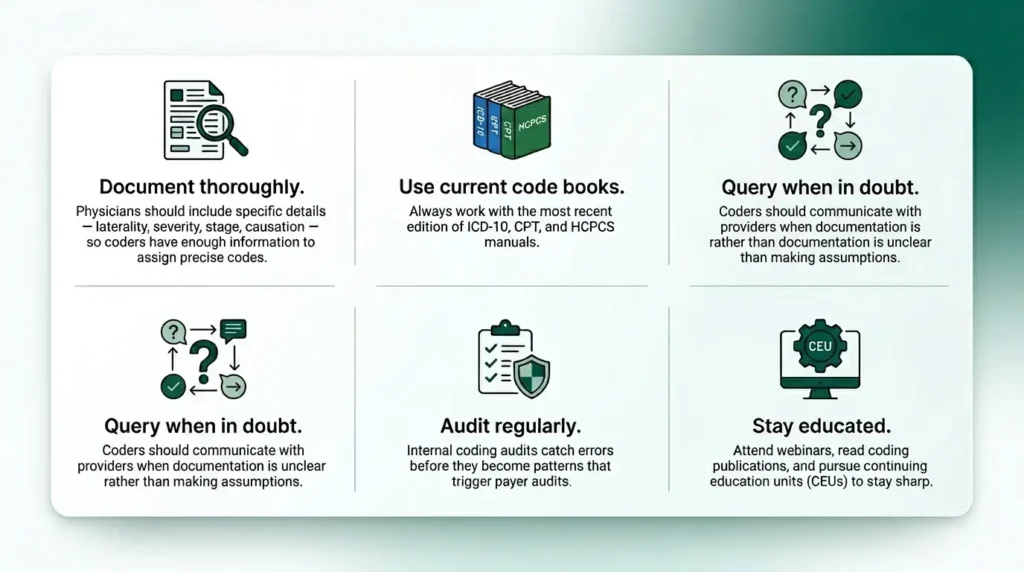
Whether you’re a coder, a practice manager, or a clinician, here are some practical insights for improving coding accuracy:
Conclusion
Medical coding is a vital but often invisible function in the healthcare system. It connects clinical care to financial reimbursement, supports public health data, and ensures providers and patients are treated fairly in the billing process.
Whether you’re a healthcare professional looking to improve your practice’s revenue cycle, a patient trying to understand your medical bills, or someone considering a career in health information management, understanding what medical coding is and how it works gives you an enormous advantage.
Accurate, compliant medical coding means faster payments, fewer denials, and better outcomes for everyone involved. If your organization is struggling with coding accuracy or claim rejections, it may be worth evaluating whether a professional medical coding service could help streamline your operations and protect your revenue.
The healthcare system is complex, but medical coding helps make sense of it all — one code at a time.
FAQs
Q1. What is medical coding in simple terms?
Medical coding is the process of converting a patient’s diagnosis, treatment, and procedures into standardized alphanumeric codes. These codes are used to submit insurance claims, track health data, and ensure healthcare providers are paid for their services.
Q2. What does medical coding mean for patients?
For patients, medical coding directly affects their insurance claims and out-of-pocket costs. Accurate coding ensures your insurance pays for what your doctor actually did. Coding errors can lead to higher bills, claim denials, or incorrect charges on your explanation of benefits.
Q3. What are the most common medical code sets?
The most widely used code sets are ICD-10-CM (for diagnoses), CPT (for outpatient procedures and services), and HCPCS (for supplies, equipment, and non-physician services). Inpatient hospitals also use ICD-10-PCS for procedures.
Q4. Is medical coding the same as medical billing?
No, Medical coding and medical billing are related but different. Coding involves translating clinical documentation into codes. Billing uses those codes to create and submit claims to insurance companies and follow up on payments. Both roles are essential to the revenue cycle.
Q5. How do I start a career in medical coding?
Most medical coders begin by earning a formal credential, such as a CPC from AAPC or a CCS from AHIMA. These programs cover medical terminology, anatomy, coding guidelines, and compliance. Many coders also complete an associate degree in health information technology. Entry-level positions are available in hospitals, clinics, and remote coding roles.